Primer Series · Page 3 – How Whiskey is Made
The process of making whiskey is both science and craft. Every decision — which grains to use, how long to ferment, how to distill, what barrels to fill — leaves its fingerprint on the final flavor. This page walks you through each step, with a focus on American whiskey production.
From Grain to Glass: The Production Process
1. The Mash Bill (Grain Bill)
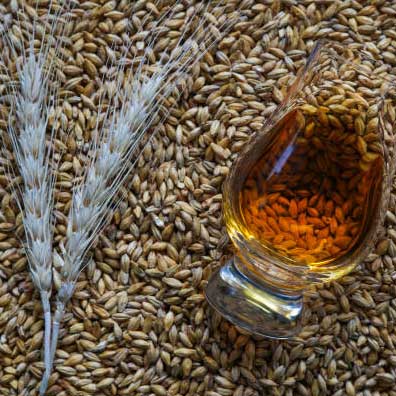
Every whiskey begins with a recipe of grains called the mash bill (or grain bill). For American whiskeys, this typically means a primary grain — corn for bourbon, rye for rye whiskey — combined with secondary grains and a small percentage of malted barley.
The malted barley plays a critical functional role even in small quantities: it contributes enzymes (amylases) that convert the starches in the other grains into fermentable sugars. Without malted barley (or another enzymatic source), fermentation cannot proceed efficiently.
The grain ratios matter enormously to flavor. A high-corn bourbon (75%+ corn) will be sweeter and rounder. A high-rye bourbon (25–35% rye) will have more spice and complexity. A wheated bourbon, where wheat replaces rye as the secondary grain, will be softer and more delicate.
2. Milling & Mashing
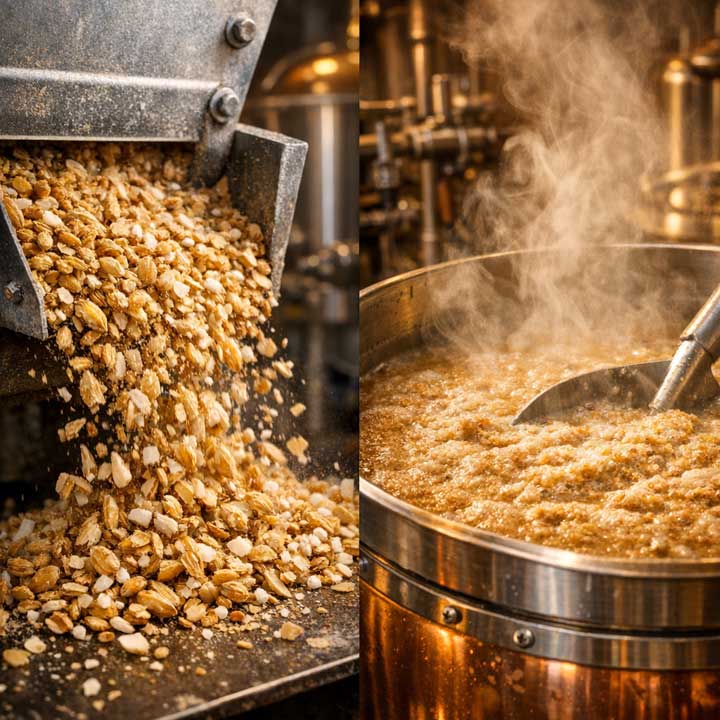
The grains are milled (ground) to break open the kernels and expose the starches. The milled grains are then cooked with hot water to form a thick porridge called the mash. Each grain type is typically added at different temperatures:
- Corn requires the highest cooking temperature (~212°F / 100°C) to fully gelatinize its starches
- Rye and wheat are added at a lower temperature as the mash cools
- Malted barley is added last at the lowest temperature (~150°F / 65°C) to preserve the enzymes that convert starch to sugar
The sugary mixture of water and cooked grains—often called the mash—is cooled and ready for fermentation.
3. Sour Mash & Backset
Most American bourbon and Tennessee whiskey producers use the sour mash process — and it’s important not to confuse this with a flavor descriptor (it doesn’t make whiskey taste sour). In sour mashing, a portion of the spent grain from the previous distillation run (called backset or setback) is added to the new mash before fermentation begins.
Backset is acidic, and adding it serves two important purposes: it lowers the pH of the new mash to inhibit bacterial contamination, and it maintains consistency from batch to batch — functioning somewhat like a sourdough starter. “Sour mash” is essentially standard practice in American whiskey production; it’s not a special premium designation.
4. Fermentation
The cooled mash is transferred to large fermentation vessels — traditionally open cypress wood vats, though stainless steel tanks are now common — and yeast is added. The yeast consumes the sugars and produces alcohol, carbon dioxide, and a wide array of congeners: flavor compounds including esters (fruity notes), aldehydes, and acids that will contribute to the whiskey’s eventual flavor profile.
Fermentation typically runs for 3 to 7 days for American whiskeys (longer ferments tend to produce more fruity, complex flavors). The result is a liquid called distiller’s beer or wash, typically 7–10% ABV — essentially a thick, unhopped beer. It is not pleasant to drink, but its flavors are the foundation of the finished whiskey.
The yeast strain is another carefully guarded secret at many distilleries. Some operations have maintained proprietary yeast cultures for generations — Jim Beam’s house yeast has been used since Prohibition. Yeast significantly influences fruity and floral notes in the final spirit.
At the end of fermentation, the vessels are sometimes open to visitors at distillery tours. The smell is an experience in itself — sour, yeasty, and surprisingly complex.
5. Distillation
Distillation concentrates the alcohol and separates desirable flavors from undesirable ones. American whiskey production uses two main approaches:
Column Still (Continuous) Distillation
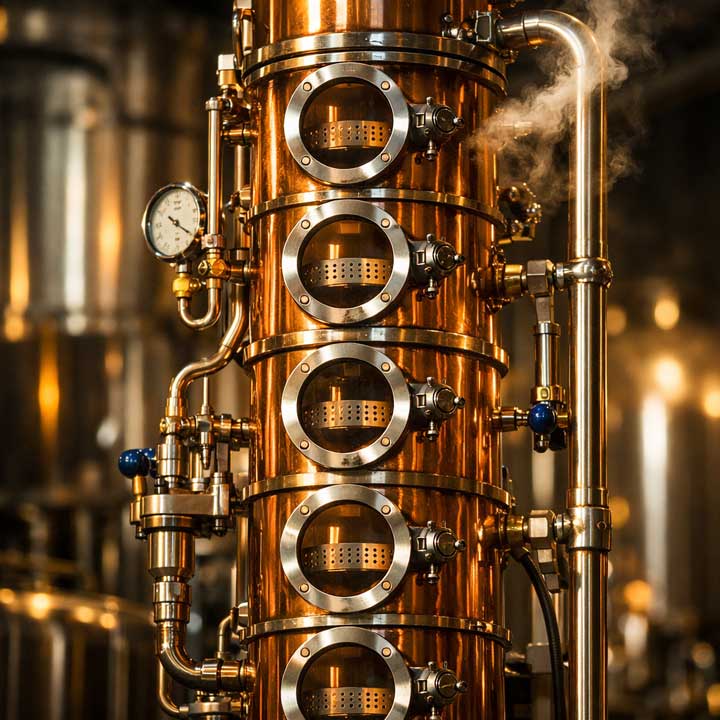
The vast majority of American bourbon and rye is distilled first in a tall column still (also called a beer still or continuous still). The wash enters near the top of the column while steam rises from the bottom; as they interact on a series of perforated plates, alcohol vapors rise and are captured. Column stills are highly efficient and can run continuously, producing large volumes of distillate (called low wine) typically around 55–65% ABV.
Doubler or Thumper (Pot Still)
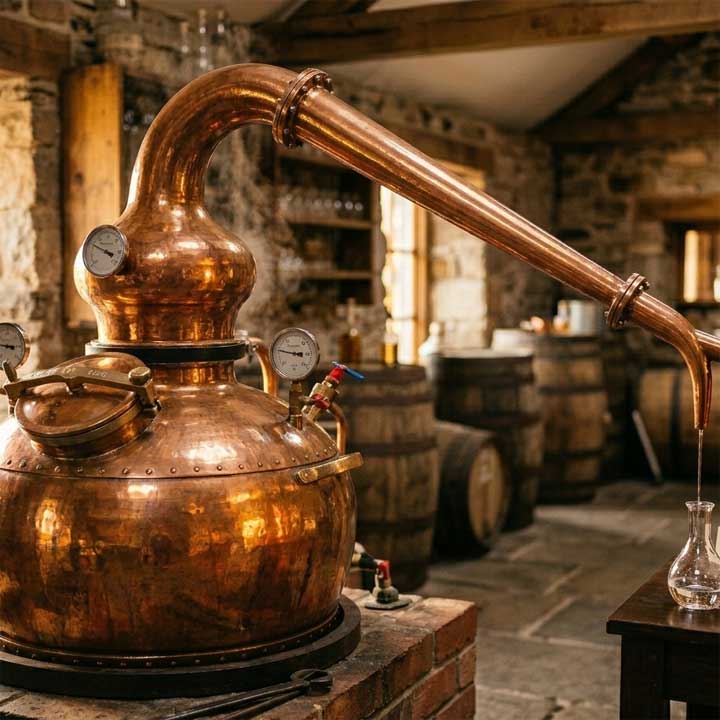
The low wine from the column still is typically redistilled in a smaller copper vessel called a doubler (if liquid-fed) or a thumper (if vapor-fed). This second distillation concentrates the spirit further and refines the flavor. US law limits the final distillation proof to 160 proof (80% ABV) for bourbon — this ceiling ensures enough flavor compounds remain in the spirit.
The resulting spirit — called new make, white dog, or new distillate — is clear, raw, and surprisingly revealing of the grain character. Many distilleries now offer white dog samples, which give a unique window into how much the barrel will transform the spirit.
Scotch single malt distilleries typically use pot stills exclusively and distill twice. Irish whiskey often distills three times in pot stills, producing a lighter spirit. This is one reason Scotch and Irish whiskeys taste so different from each other — and from American bourbon.
6. Barreling & Aging
For bourbon, the new make spirit is diluted with water (if necessary) to no higher than 125 proof (62.5% ABV) and filled into “new, charred, oak containers.” (This almost always means American White Oak.) These are the only barrels legally permitted for bourbon — no reused barrels, no other wood species.
The barrel char is critical. Distillers specify a char level from #1 (lightest) to #4 (heaviest, called “alligator char” for its scaly, cracked appearance). The charring creates a layer of carbon that filters harsh compounds, and a layer of caramelized wood sugars just beneath the char — the source of much of bourbon’s vanilla and caramel flavors.
During aging, the spirit cycles in and out of the wood with seasonal temperature changes:
- In summer heat, the barrel expands and drives whiskey deep into the wood fibers, extracting color, tannins, and flavor compounds
- In winter cold, the barrel contracts and the whiskey is drawn back out, now carrying those extracted compounds
- This seasonal cycling is far more pronounced in Kentucky and Tennessee than in Scotland, which is why Kentucky bourbon ages faster relative to Scotch
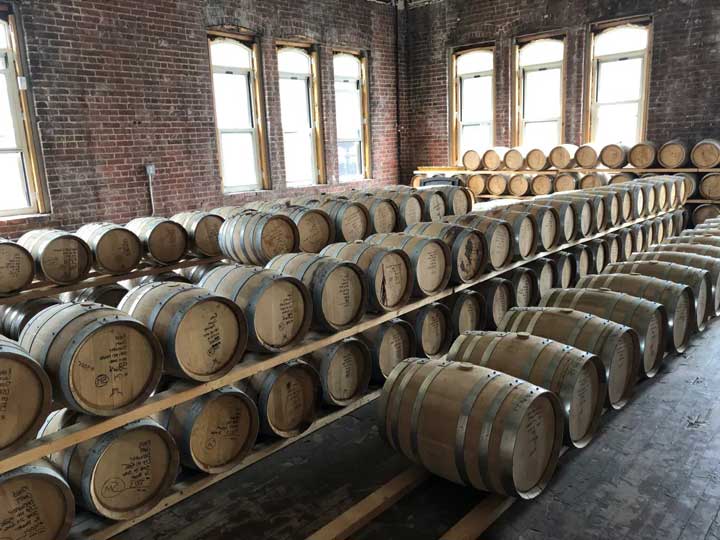
The location of barrels within the rickhouse (barrel warehouse) also matters. Upper floors experience greater temperature swings and produce more intensely flavored whiskey faster. Lower floors age more slowly and gently. Some distilleries rotate barrels between floors; others use barrel position as a deliberate production variable.
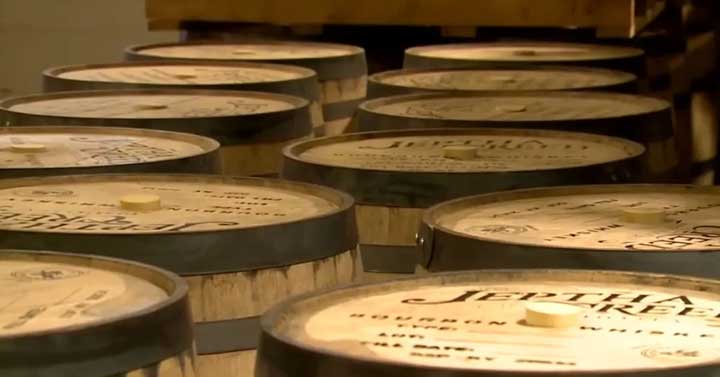
Each year, roughly 2–4% of a barrel’s contents evaporates through the porous wood — this is called the Angel’s Share. Over many years, this loss adds up significantly, which is why long-aged whiskeys are rarer and more expensive.
7. Blending, Proofing & Bottling
When the master distiller determines a barrel (or a batch of barrels) has reached maturity, the whiskey is removed and prepared for bottling. Most bourbons are batched — the contents of dozens or even hundreds of barrels are combined to achieve a consistent house flavor profile. Single barrel expressions, by contrast, are bottled directly from one individual barrel.
The whiskey is typically reduced with limestone-filtered water to reach the desired bottling proof. “Chill filtration” — cooling the whiskey before filtration to remove haze-causing fatty acids — is standard practice but is increasingly being skipped by craft and premium producers, who prefer to preserve more flavor even at the cost of a slight haze in cold temperatures.
Legally, nothing but water may be added to bourbon before bottling. No caramel color, no flavoring, no other additives — a strict standard that distinguishes bourbon from many international whiskey categories.
Special Designations to Know
Bottled in Bond (BiB): A federally regulated designation (Bottled-in-Bond Act of 1897) guaranteeing the whiskey is the product of one distiller at one distillery, from one distillation season, aged at least 4 years in a federally bonded warehouse, and bottled at exactly 100 proof. BiB is a mark of authenticity and quality.
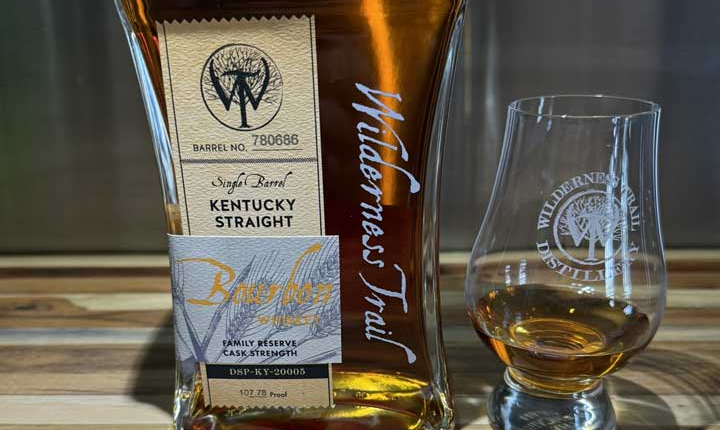
Single Barrel: The contents of one individual barrel, undiluted by blending with other barrels. Each bottle from a single barrel release may taste slightly different.
Small Batch: No legal definition — it simply means a limited number of barrels were blended. Marketing teams use it with varying standards.
Continue the Whiskey Primer:
Previous: Page 2 — Types of Whiskey
You are here: Page 3 — How Whiskey Is Made
Next: Page 4 — Reading a Whiskey Label