Primer Series – Page 1 – What Is Whiskey?
Welcome to the COWS Whiskey Primer — your guide to understanding whiskey from the ground up. Whether you’re brand new to the spirit or looking to sharpen your knowledge, this series will take you from the basics all the way through advanced tasting techniques.
What Is Whiskey?
At its most fundamental, whiskey is a distilled spirit made from fermented grain mash. That simple sentence, however, barely scratches the surface of a drink that has been refined over centuries, shaped by geography, climate, regulation, and culture into one of the most complex and varied spirits in the world.
The core ingredients are simple: grain, water, yeast, and time. What makes whiskey endlessly fascinating is how profoundly each of those elements — and the choices made around them — can transform the final product in the glass.
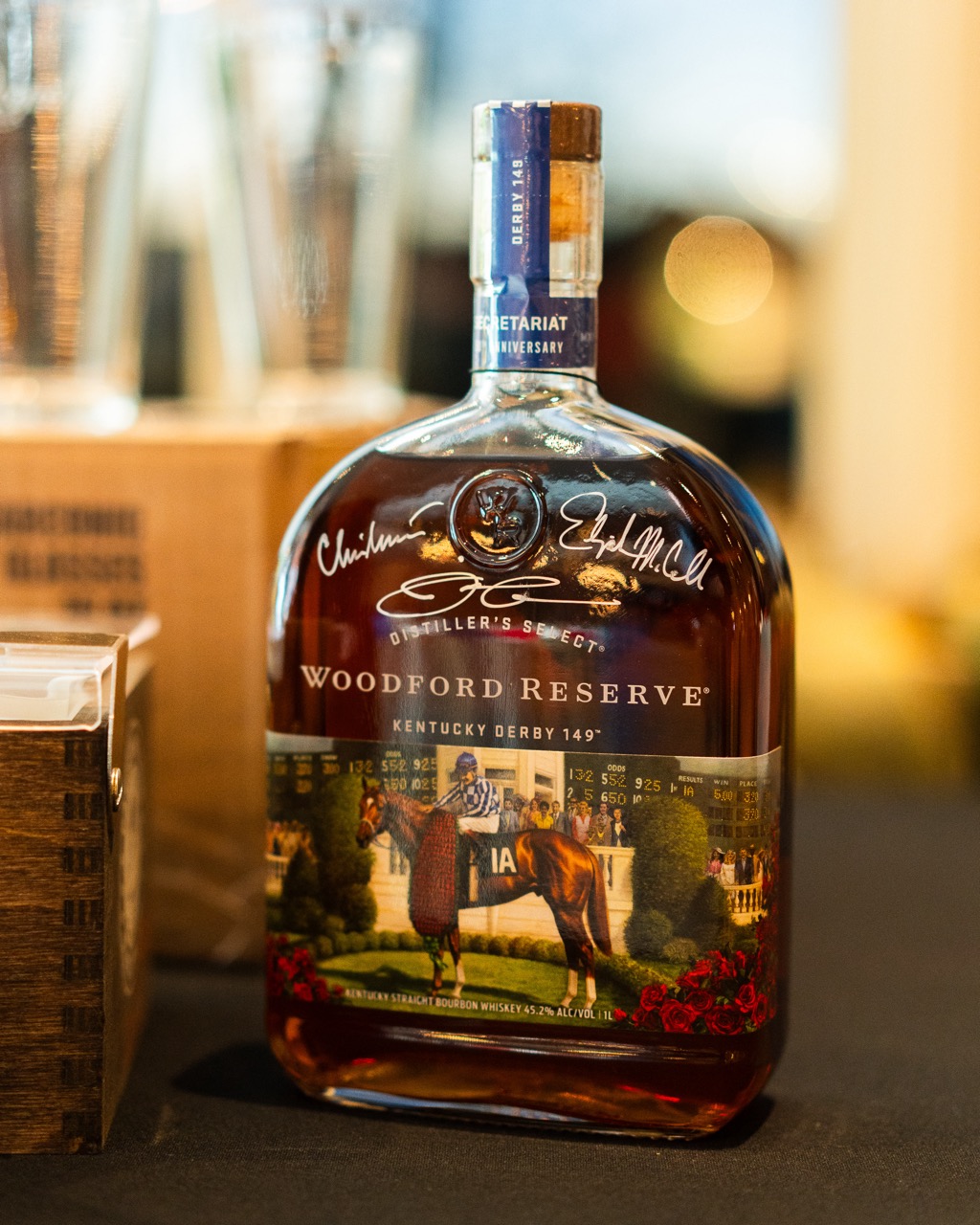
How Does Whiskey Differ from Other Spirits?
To understand whiskey, it helps to see where it sits among distilled spirits broadly:
Whiskey
Made from grain (corn, rye, barley, wheat). Rich, complex flavors from wood interaction.
Brandy / Cognac
Made from fermented fruit, most commonly grapes. Aged in wood, but from a fundamentally different base.
Vodka
Can be made from grain, potato, or other sources. Distilled to very high proof to strip flavor; not aged in wood.
Tequila / Mezcal
Made from agave plants. Distinct terroir-driven flavor; may or may not see oak aging.
Rum
Made from sugarcane or molasses. Usually aged in oak barrels, often previously used bourbon barrels.
Gin
Grain-based like whiskey but redistilled with botanicals (juniper required). Typically not aged.
What sets whiskey apart is the combination of grain origin and oak aging. That time in wood is where much of whiskey’s color, flavor complexity, and character develops — a fact that makes distillery location (and climate) a major factor in the final product.
A Brief History of Whiskey
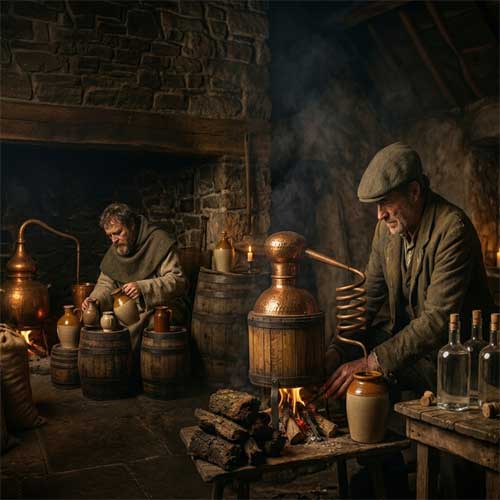
The art of distillation traveled from the Middle East into Europe during the medieval period, largely by monks that used distilled spirits for medicinal purposes. By the 15th century, distilling grain-based spirits was well established in both Scotland and Ireland — the two nations that most credibly claim to be whiskey’s birthplace.
The Old World Origins
The earliest written record of Scotch whisky dates to 1494, when an entry in the Scottish Exchequer Rolls records malt being sold to a friar to make aqua vitae — “water of life.” The Gaelic equivalent, uisce beatha (pronounced roughly “ish-kuh bah-huh” or “ish-ka va-ha” depending on Scottish vs. Irish Gaelic), is the direct ancestor of the word “whiskey” itself.
In Ireland, similar traditions developed simultaneously. For centuries, distilling was a domestic and community practice, with little formal regulation. It wasn’t until governments began taxing spirits heavily in the 17th and 18th centuries that illicit “moonshine” production flourished — a tradition that would later cross the Atlantic with Irish and Scottish immigrants.
Whiskey Comes to America
Scots-Irish immigrants settling in Pennsylvania and the Appalachian backcountry brought their distilling traditions with them. They adapted quickly to their new environment: rye grew abundantly in the mid-Atlantic, and corn thrived in Kentucky’s fertile limestone-filtered soil. American whiskey was born out of this pragmatic adaptation — using what was locally available.
Kentucky’s unique geography proved transformative. The region’s abundant limestone-filtered water (naturally low in iron, which can cause off-flavors) and its dramatic seasonal temperature swings — which cause barrels to expand in summer heat and contract in winter cold, pulling whiskey deep into the wood — created ideal conditions for aging. By the early 1800s, Bourbon County, Kentucky had become synonymous with a distinctive style of corn-based whiskey aged in charred oak barrels.
Why “Whiskey” vs. “Whisky”?
Both spellings are correct — they simply reflect different national traditions. The United States and Ireland traditionally use “whiskey” (with the ‘e’). Scotland, Canada, Japan, and most of the rest of the world use “whisky” (without the ‘e’). At COWS, you’ll see both spellings depending on what’s in the glass.
The Four Non-Negotiables
Despite the enormous variety of whiskeys on the market, virtually every legitimate whiskey in the world shares four foundational characteristics. Regulations vary by country and category, but these elements are universal:
- Made from grain. Corn, rye, malted barley, wheat, or a combination thereof. The grain bill is the DNA of the whiskey — it determines the fundamental flavor profile before distillation or aging even begins.
- Fermented. The grain starches must be converted to sugars and then fermented by yeast into a “distiller’s beer” — typically 5–10% ABV — before distillation. The yeast strain used can significantly influence flavor.
- Distilled. The fermented wash is heated in a still to concentrate the alcohol and flavor compounds. The type of still (pot still vs. column still) and the distillation proof both shape the spirit’s character.
- Aged in oak. With very few exceptions (some white/unaged whiskeys), all whiskey must spend time in oak containers. For Bourbon, new charred oak barrels are legally required — a rule that has enormous downstream effects on the global barrel market, since those once-used barrels go on to age Scotch, Irish whiskey, rum, and tequila around the world.
Why Does Any of This Matter?
COWS was founded on the belief that the best way to find a whiskey you love is to taste it blind — without the influence of the label, the price tag, or the reputation. But understanding what’s actually in the glass deepens that experience immeasurably.
When you know that a high-corn mash bill tends toward sweetness, that new charred oak contributes vanilla and caramel, and that a longer age statement doesn’t automatically mean “better” — especially in a warm climate — you’re not just drinking whiskey. You’re engaging with it.
That’s what this Primer is for.
Continue the Whiskey Primer:
You are here: Page 1 — What Is Whiskey?
Next: Page 2 — Types of Whiskey